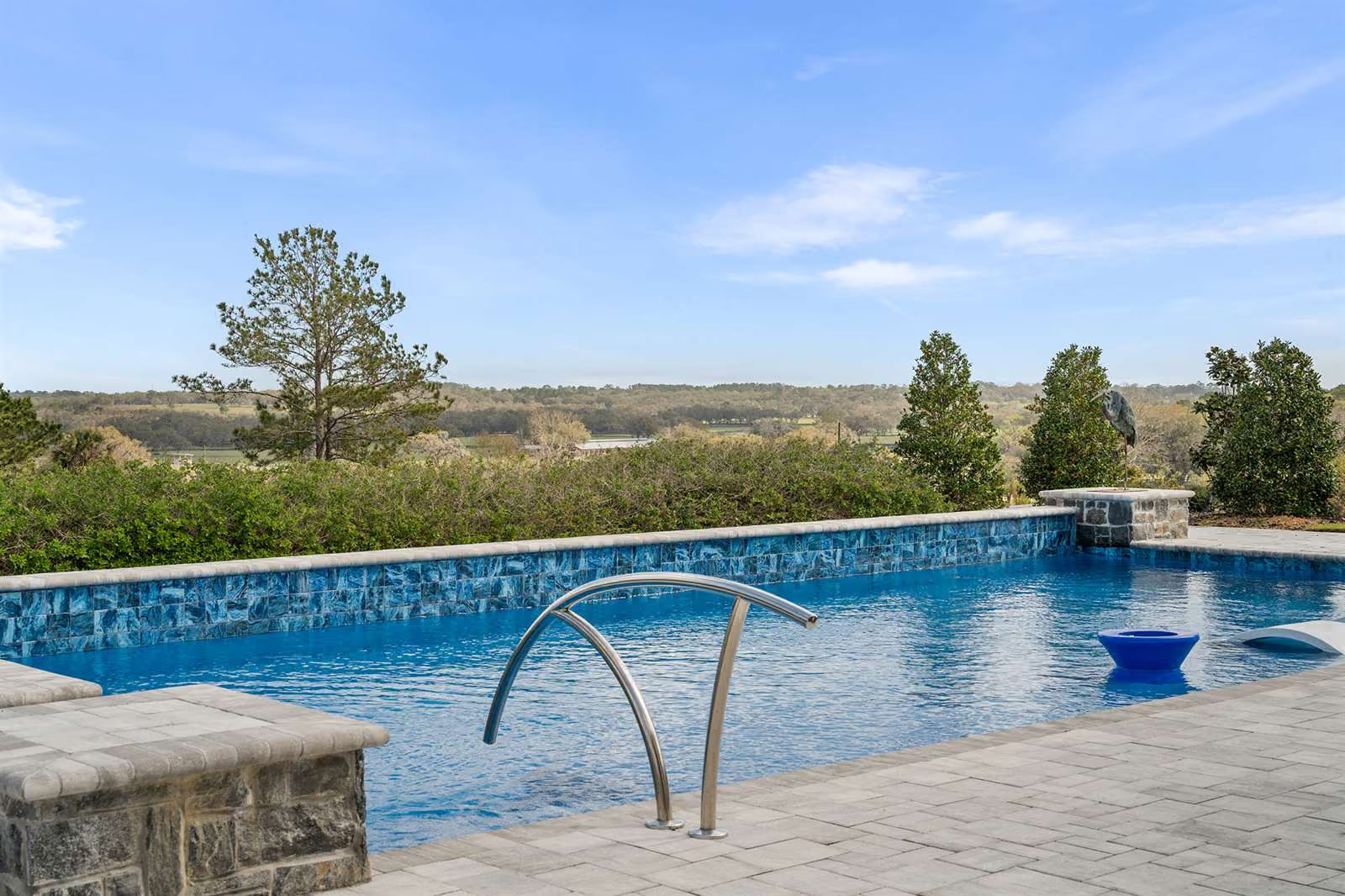
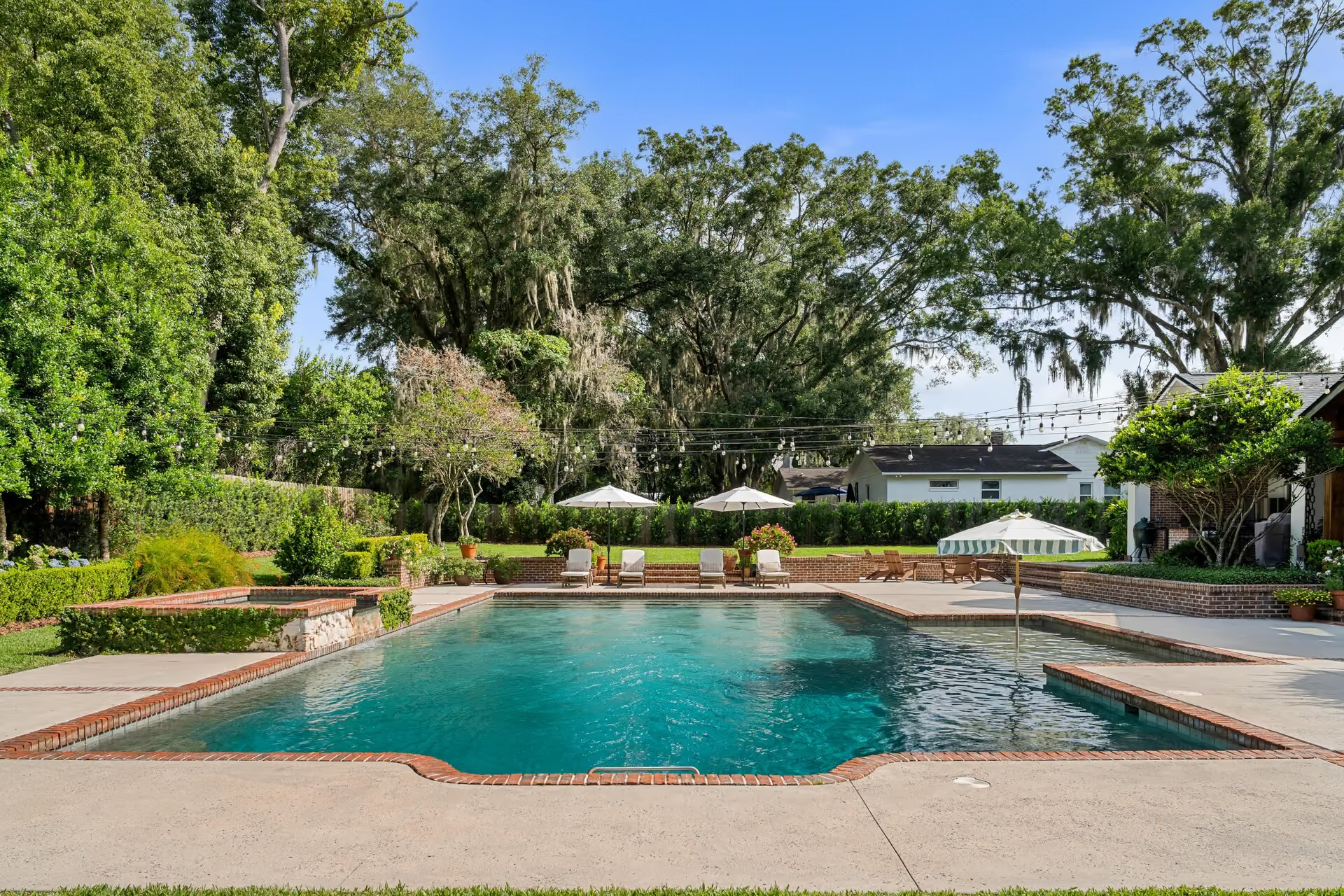
Groundwater across Marion County is hard. UF/IFAS Extension puts it at roughly 180 parts per million, about 10.5 grains per gallon, which is what happens when water sits in limestone before anyone pumps it out.
What actually comes out of your hose is a different question, and the answer changes what your pool needs.
Ocala does not have one water supply
Three different situations exist inside the same county, and most pool owners do not know which one they are in.
The City of Ocala draws from six wells in the Upper Floridan aquifer and softens the water before it reaches you. Its own annual report says so plainly: the water is softened and chlorinated for disinfection. Softening at the plant is unusual in this part of Florida and it takes a real bite out of the hardness before the water ever reaches a hose.
Marion County Utilities is a separate operation running more than two dozen small systems across the county. Those are chlorinated, aerated and filtered for sediment, with a corrosion inhibitor added, but they are not softened. The hardness arrives intact.
Private wells deliver the aquifer as it comes, minerals and dissolved iron included.
Neither the city nor the county publishes a finished hardness number, so no one can tell you your exact figure without testing it. What you can know is which direction your water leans, and that is enough to predict what your pool will do over a summer.
How much calcium your pool actually collects
An uncovered pool in Central Florida loses close to a quarter inch of water a day to evaporation. On a 14 by 28 foot pool that works out to about 61 gallons a day, or roughly 1,800 gallons a month that you replace from the hose.
On unsoftened water at around 180 ppm, those 1,800 gallons carry close to three pounds of dissolved hardness minerals into your pool every month. None of it leaves, because calcium does not evaporate when water does. Run that through a summer and you have added eight to eleven pounds of calcium to water that already had plenty of it.
On softened city water the monthly figure is lower. The concentrating effect is identical. The only thing that changes is how long you have before it shows.
What that looks like in the pool
Scale rarely announces itself. It creeps up over a season or two, and by the time it is obvious you are looking at a repair rather than an adjustment. The early signs:
- A white or grey crust along the tile line that feels like fine sandpaper
- Water that reads balanced on a test strip but still looks slightly hazy
- A salt cell that loses output and needs cleaning more often than it used to
- Heater elements that scale over and start short cycling
- Plaster or pebble finish that turns rough underfoot
The tile line is cosmetic. The rest is not. Scale inside a heat exchanger or on a salt cell blocks heat transfer and shortens the life of parts that cost real money to replace. We see both on pool equipment repair calls around Marion County every month.
The numbers worth tracking
Calcium hardness in a plaster pool belongs between 200 and 400 ppm. Below 200, the water starts pulling calcium out of the plaster to satisfy itself. Above 400, it starts depositing calcium on every surface it touches.
Hardness on its own does not decide which way things go. pH, total alkalinity, water temperature and stabilizer all feed into the Langelier Saturation Index, which is the calculation that predicts whether water will scale or etch. A pool sitting at 420 ppm hardness with pH held at 7.4 can behave better than a pool at 300 ppm with pH drifting up to 8.0 in August.
Practical targets for an Ocala pool:
- pH 7.4 to 7.6, kept toward the low end through the hot months
- Total alkalinity 80 to 120 ppm
- Calcium hardness 200 to 400 ppm
- Cyanuric acid 30 to 50 ppm, or 60 to 80 ppm in a salt pool
Bringing hardness back down
No chemical removes calcium from pool water. The realistic options are dilution and specialty filtration.
A partial drain and refill is the usual answer. Take out a third to a half of the water, refill from the hose, and retest. The arithmetic is straightforward. Drain half of a 500 ppm pool, refill with water at 180 ppm, and you land near 340 ppm. On softened city water you would land lower, which is one more reason knowing your supply matters.
Draining a pool in Central Florida is not a job to improvise. Our water table sits high after a wet summer, and an empty shell can lift or crack from hydrostatic pressure. A fiberglass or vinyl pool is even less forgiving. If a full drain is needed for resurfacing, it gets done with the hydrostatic relief valve open and the work scheduled tight so the shell is not sitting empty.
Mobile reverse osmosis filtration is the other route. It strips hardness without dumping the water, which appeals during a watering restriction, though it costs more than a refill and is worth pricing against a simple drain.
Sequestrants help in the meantime. They bind calcium and keep it in solution so it cannot plate out on surfaces. They need redosing monthly because chlorine breaks them down, and they hide the problem rather than fix it.
One change that costs nothing: stop shocking with calcium hypochlorite. Cal-hypo adds calcium every time you use it. Liquid chlorine does not. On a pool already sitting at 400 ppm, switching shock products keeps you from digging the hole deeper.
Scale that has already formed
Once calcium has crusted onto tile, brushing will not touch it. Light deposits come off with a pumice stone and patience. Anything heavier calls for bead blasting, which strips the tile without damaging the glaze the way an acid wash can.
Scale on plaster is a different conversation. A drain and acid wash removes the top layer of the finish along with the scale, which buys a few years on an older surface but thins it permanently. If the plaster is already rough, patchy and past fifteen years, resurfacing is usually the better spend. We walk owners through both options with real numbers before anyone commits.
A routine that stays ahead of it
Hard water is a maintenance question, not a crisis. Test calcium hardness monthly rather than weekly, since it moves slowly. Brush the waterline on every visit so deposits never get a foothold. Pull and inspect the salt cell every three to four months. Keep an eye on how much you are topping off, because a jump in refill volume points either to a hot dry stretch or to a leak.
Our weekly residential pool cleaning in Ocala includes full chemistry testing and balancing on every visit, with a photo report so you can see what the water is doing over time. If you would rather have someone else watch the numbers, get a free quote or call (352) 246-1350. We serve Ocala and the rest of Marion County year round.